Rigor doesn’t come from the build tool

When you ask an experienced CRO lead what worries them about AI-powered variation builders, their answers are more interesting than the standard “can it understand our brand guidelines?”
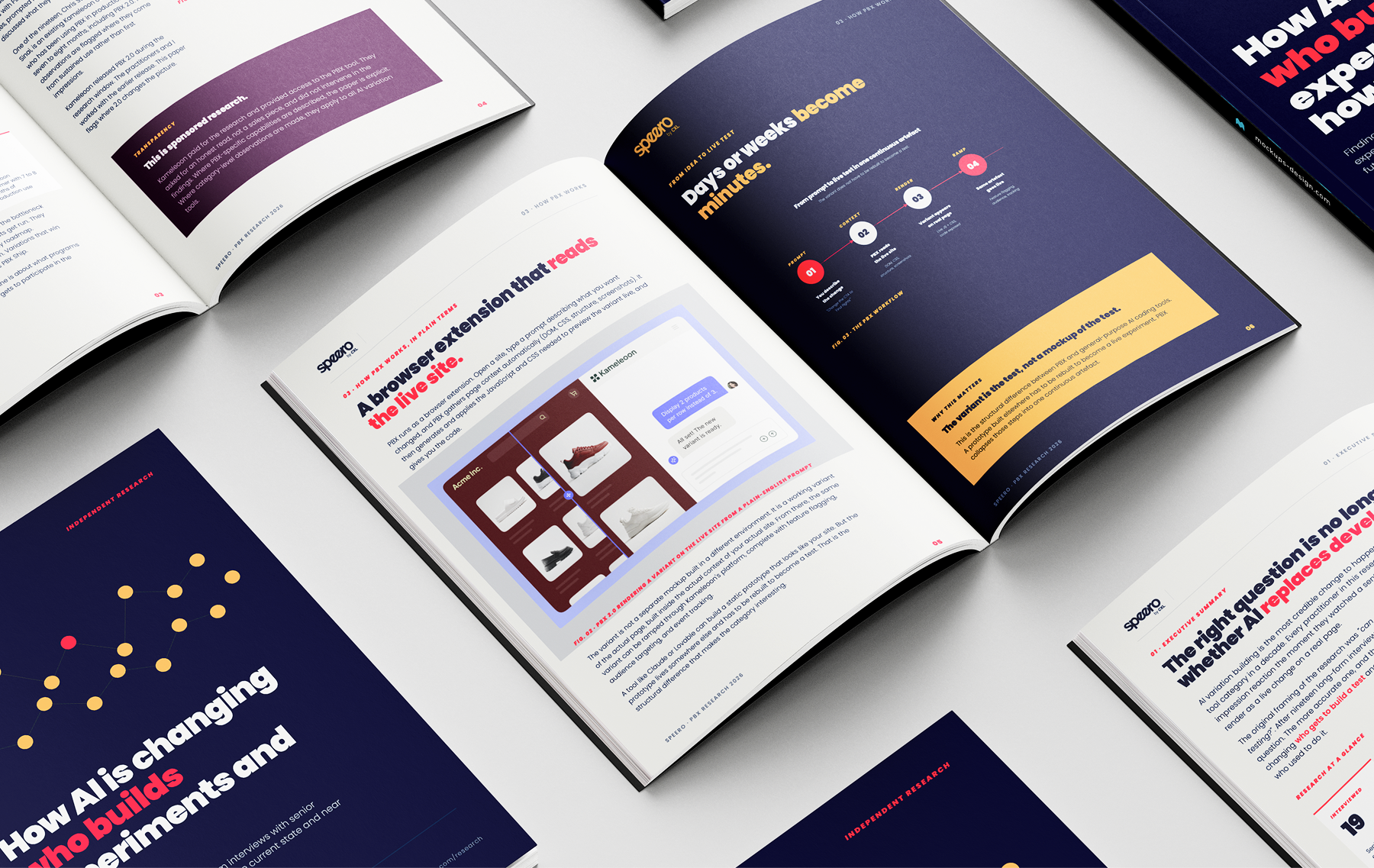
In Speero’s recent research with senior practitioners, a lead at a global retailer used Prompt-Based Experimentation (PBX) to generate variations with natural-language prompts.
In his discussions, Speero asked what could go wrong if such a tool was widely available at his organization. Ungoverned, he said, it “could go a bit mad,” with how easy it could be for changes to reach the site that weren’t rigorously tested.
That isn’t a statement on the tool itself, because rigor doesn’t come from the build tool. Rather, it’s a precise read of what the tool actually changes.
{{blue-block-1}}
Discipline on decisions
Experimentation imposes discipline on decisions that are normally driven by opinion, politics, or the loudest voice in the room.
That discipline lives in the prior research that goes into a hypothesis, into the hypothesis itself, the success criteria and analysis plan, and the statistical thresholds that validate the result.
The build tool is important, but it doesn’t allocate discipline. When the build step collapses from a full dev sprint to just a few minutes, the importance of discipline goes nowhere, but it becomes drastically easier to skip.
The opportunity for speed is not a mandate
Adopting AI is “supposed” to make organizations faster. Using AI tools like PBX, organizations remove a bottleneck and, not unreasonably, expect a greater output.
There’s nothing wrong with that, of course. But waiting on developer time forced pauses in the program and created increased incentives for practitioners to justify their tests. This naturally gave the program rigor in the form of teams discussing hypotheses, citing research, and agreeing on what success looks like.
Removing the pause removes the friction, but it also risks removing the moment where the thinking happens.
What this looks like in practice
This discipline is all too easy to skip, but the practitioners in Speero’s research suggest concrete habits to keep the discipline strong.
The most important step is to rebuild the pause the bottleneck used to force. Build in an intentional review that ensures no variation goes live without a hypothesis, some backing evidence, and success criteria, and use master prompting to encode guardrails in every test.
Holly Gleason, a digital testing manager, treated her AI-built variations like any other code change, saying she “would probably put that into a lower environment and test it before putting it into production.” This means inspecting, simulating, and confirming instrumentation files before ramping to a small share of traffic.
This separates who can build from who can release. Remember: PBX widens access to building, but that does not mean you have to widen access to shipping.
Spend the time you’re getting back wisely
And yet, improved speed is a good thing, as long as the time savings are spent wisely. Use the hours AI hands back in back-and-forth with design, ticket writing, and coordination to compound results. In other words, spend it on building sharper hypotheses, more thorough analyses, and a more genuine integration of what each test teaches you.
This is how experimentation matures as a discipline. You can now test more than you ever could before, but the release process does not have to (and arguably should not) change. Responsible practice still means inspecting code, simulating variants, and ramping them up to a small share of traffic before going live.
Faster building is big, but the care around it is still much more important.
{{cta-block}}
.jpg)


Read more about the insights Speero discovered and what eighteen other senior practitioners had to say about PBX in How AI is changing who builds experiments and how by Jonny Longden, Speero.
How Kameleoon builds the guardrails in
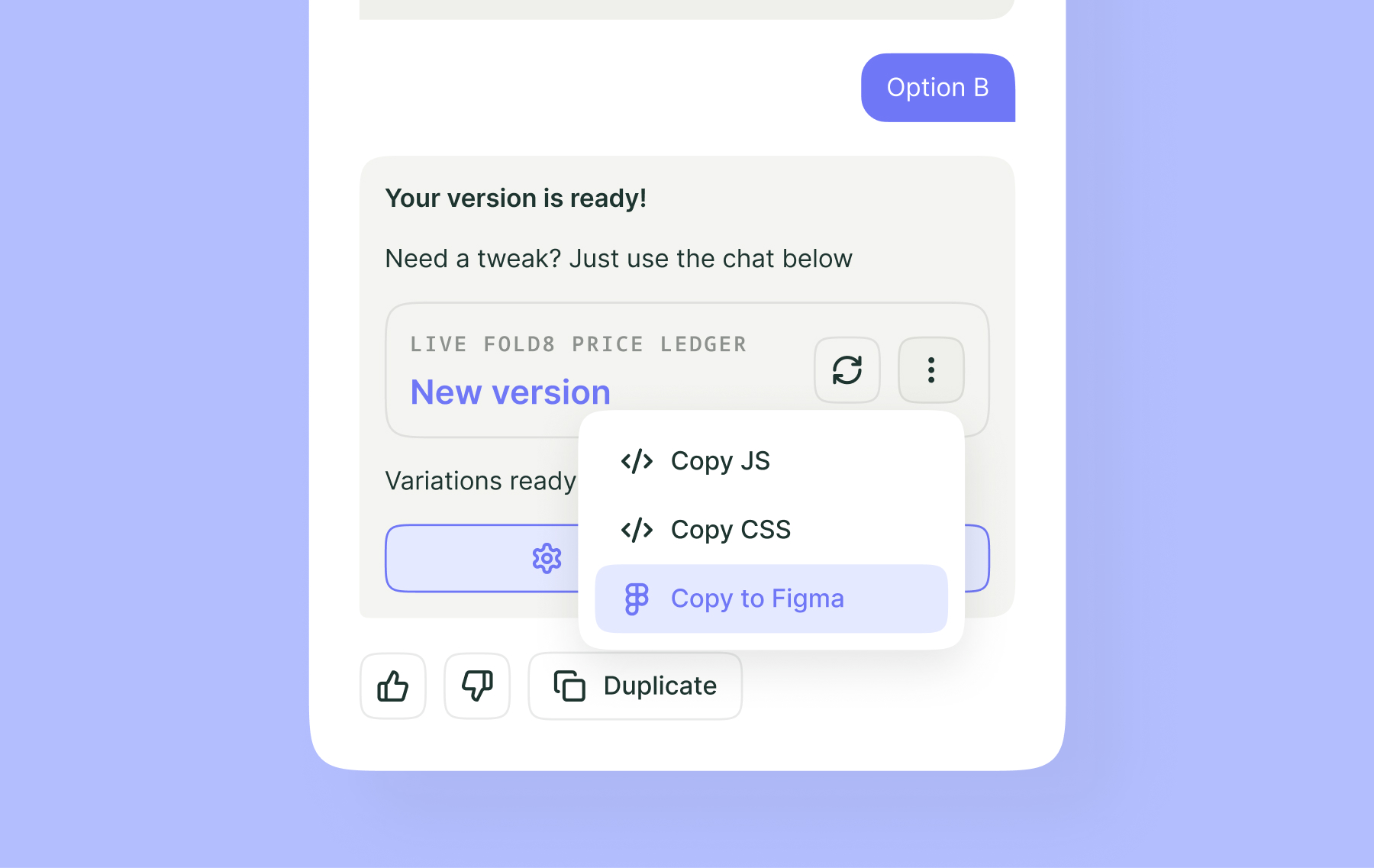
Rigor is easier to keep when the platform you use expects it. Kameleoon pairs prompt-based variation building with the controls that separate fast from careless: pre-launch configuration, a multi-stat engine, and governance settings including brand guidelines and master prompting.
How Kameleoon builds the guardrails in
Rigor is easier to keep when the platform you use expects it. Kameleoon pairs prompt-based variation building with the controls that separate fast from careless: pre-launch configuration, a multi-stat engine, and governance settings including brand guidelines and master prompting.