What is always valid inference and why does faster testing need it?


Always valid inference is a method that continuously controls false positive rates in experiments, enabling valid decisions at any stopping point. It reduces misleading A/B test results from early or repeated peeking at data. This approach is especially useful in AI environments where teams need to respond quickly to early signals.
That matters more and more as AI speeds up testing. Check a standard A/B test once per day over a couple of weeks and your chance of a false winner can climb from 5% to over 20%. Always valid inference keeps it at that original 5% no matter how often you check.
How always valid inference works
Always valid inference is a method researchers use in experimentation to ensure results remain trustworthy, even when they repeatedly check results during an experiment. It fits how teams actually work, where they check results as data comes in instead of waiting until the end.
In traditional A/B testing, checking results prematurely can lead to misleading conclusions. Early observations may show one variation outperforming another due to random fluctuations, rather than because it is truly better. Acting early can lead you to decisions based on random variation instead of real differences.
Here's how always valid inference behaves and what makes it work in experiments:
- Continuous monitoring: The system controls the false positive rate even during continuous monitoring and adaptive stopping. If the p-value falls below a certain threshold at any point, you can stop the experiment, and the result will still be reliable.
- Always-valid p-values: The p-value remains meaningful at any point in time. Stopping early doesn’t increase the risk of a false alarm.
- Error control: The reliability of conclusions doesn’t depend on when or how often you peek and stop the experiments.
- Flexible decision-making: As the experiment remains always valid, teams can act when the evidence is sufficiently strong. There are no constraints of a fixed testing horizon.
Why A/B testing needs to evolve in the AI era
AI has made experimentation faster and easier. However, this speed can also amplify the limitations of traditional A/B testing methods, leading to suboptimal results.
Below are the factors that require teams to reconsider A/B workflows in the AI era.
1. Fixed horizon testing limits real-time decisions
Fixed-horizon A/B tests require setting the sample size in advance and waiting until the experiment ends to review results. This approach stops teams from acting early, even when strong signals appear sooner and causes delays in AI workflows.
Teams lose agility when constrained by rigid timelines. Real-world systems demand quick insights, yet these tests provide no safe way to respond before the experiment ends.
2. Early peeking creates false signals
Sneak peeks into the experiments increase the likelihood of false positives. It can make one version appear as a winner after only a few checks. Random variation in the data can push p-values past thresholds and trigger these false signals.
Without always valid methods, the risk of false positives increases with each check. Teams may end up using temporary fluctuations to choose between versions.
3. Data quality issues make experiments unreliable
Bad implementation, broken tagging, or sample ratio mismatches (SRMs) distort metrics from the start of the experiment. These silent issues erode trust. They become more pronounced when teams rely on automated experiment generation and deployment workflows without adequate validation.
Even minor glitches can cascade in high-volume setups. Teams may spend more time debugging instead of learning from clean data.
4. AI increases speed, but requires guardrails
AI now acts as a copilot for teams, allowing them to create, launch, and modify experiments much faster. However, without proper safeguards, it can bring out flaws in the experimental design.
Weak experimental design introduces data issues, and poorly chosen metrics may lead to decisions that don't reflect meaningful business outcomes.
How always valid inference changes everyday experimentation
Always valid inference changes how teams run experiments in practice. Instead of waiting for a fixed endpoint, teams can treat experiments as continuous processes that evolve with incoming data. This approach aligns naturally with modern systems, where user behavior, traffic, and features are constantly changing.
Experiments evolve from static, time-bound analyses into dynamic decision-making tools that support continuous product development and optimization workflows.
Here’s how always valid inference changes the way experiments are conducted and decisions are made:
Safer decisions with continuous monitoring
Teams can check results as often as needed, whether hourly or daily, without compromising the validity of the test. Always-valid p-values are built for repeated checks, meaning that the chance of a false winner across every look stays consistent at the error rate you set (typically 5%).
If a test has several goals or multiple variations, you can apply a multiple-testing correction like Bonferroni correction or false discovery rate control. These methods ensure that the overall risk of false positives remains within acceptable limits.
Earlier stopping when evidence is strong
When one variation is clearly ahead, you’re able to stop the test and ship it without needing to wait for a sample size you set weeks ago. This also frees up your traffic for the next test that much sooner.
Keep testing when results are uncertain
If the results continue to show no clear difference, the experiment continues running rather than forcing an early decision. The level of evidence required to declare a winner adapts as data accumulates, instead of remaining fixed from the start.
In these cases, the p-value remains high, and the experiment continues. If a real effect exists, it becomes more apparent over time. This approach prevents premature conclusions that no difference exists and allows new evidence to be incorporated without restarting the test.
When to use always valid inference
Flexibility is rarely free. Sequential methods naturally have less statistical power than fixed horizon tests that run to their planned end. Stopping early also gives a less precise estimate of the lift.
Use always valid inference when you need to watch results closely: risky changes or launches, and tests you’d rather stop as soon as a winner is clear.
When you need the most precise lift possible and can wait for results, use fixed horizon testing and CUPED.
{{blue-block-1}}
Faster experimentation at scale
The impact shows up in real results. Kameleoon’s study of 1,000 prompt-based experiments found experiment creation time lowered by 97% and increased experiment velocity by 10 times.
PBX automation changes how teams operate. Instead of waiting days for implementation cycles, teams are able to move from an idea to real user traffic within minutes.
Product and marketing teams can run structured tests on their own, without relying on technical teams to implement each variation.
Teams can also run experiments in parallel, rather than waiting for one test to finish before starting another. Results from completed tests directly inform the next set of ideas.
Guardrails ensure data integrity
Guardrails provide the necessary structure to keep fast-paced PBX experimentation reliable. Every prompt generates a measurable experiment where teams define success criteria upfront, including primary goals, audience targeting, and traffic allocation.
Without guardrails, speed can result in unreliable outcomes. Unvalidated variations may be exposed to users, causing random noise to be mistaken for real improvement in variations.
Guardrails ensure reliable experimentation at scale by detecting issues like sample ratio mismatches and overlapping test interference before drawing conclusions. They ensure consistent measurement and validation for every experiment, regardless of how quickly teams create it.
How Kameleoon keeps PBX statistically rigorous with accurate data
Kameleoon's experimentation platform maintains statistically reliable results by using methods that reduce variance and improve the precision of experiment outcomes.
One core technique is controlled experiments using pre-experiment data (CUPED). The method analyzes visitors’ past behavior to account for natural differences between users and reduce random variation in conversion results. This produces cleaner, better-adjusted conversion rates that help teams identify true winners faster.
The platform also supports sequential testing. This approach enables continuous evaluation of experiments as data is collected, without waiting to reach a fixed sample size. It ensures results remain statistically valid by strictly controlling error rates.
Kameleoon's comprehensive data accuracy framework ensures experimentation results are consistent across various testing scenarios. It collects and analyzes data reliably so teams can trust the results.
The platform includes built-in data safeguards that serve as guardrails to maintain experiment integrity. Before launching, teams define key elements like goals, targeting, and traffic allocation to ensure that results are measurable and comparable.
These ensure measurable and comparable results across all experiments.
What experimentation teams should do next with always valid inference
Teams that want to monitor experiments continuously should use experimentation platforms that support sequential or always valid inference methods. These methods help teams make agile decisions based on incoming data.
This capability enables teams to act on early evidence without inflating false positives caused by frequent peeking and stopping. Without it, real-time decision-making becomes unreliable.
Teams should treat PBX speed as something that still requires structure. Fast experiment creation only works when teams follow these key steps:
- Define clear hypotheses for each experiment.
- Align experiments with business-aligned KPIs.
- Ensure clean implementation and reliable tracking.
- Apply data-quality checks before and during every test.
Kameleoon uses PBX to create experiments quickly and supports sequential testing. The platform also includes built-in guardrails like SRM detection and multiple testing corrections. These features help teams run more experiments while maintaining reliable results.
Teams can build experiments quickly through Kameleoon’s AI while keeping results statistically valid.
Try PBX for free today.
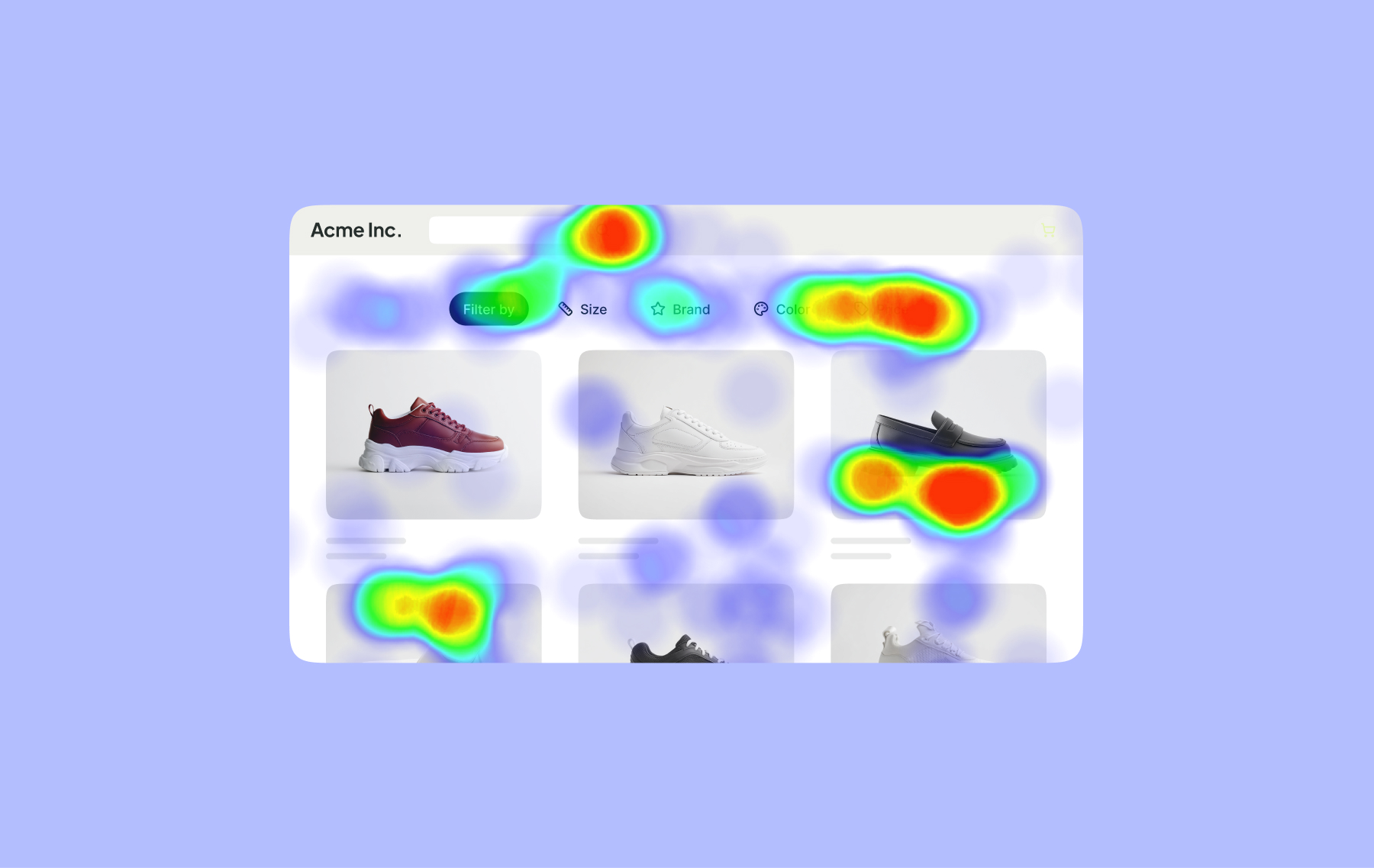



How prompt-based experimentation (PBX) makes experimentation faster, and why guardrails aren’t optional
Prompt-based experimentation (PBX) accelerates and simplifies how teams design and launch real web experiments. It removes most of the technical overhead and lets teams move from idea to execution faster.
Here’s how prompt-based experimentation works in practice:
- Describe your idea: Instead of writing code or using visual editors, teams chat with AI and describe the desired changes in plain language. A product manager or marketer can request a layout change, a new component, or a test idea in a prompt.
- PBX generates the experiment: PBX then generates a fully configured experiment with production-ready variations. The experiment is structured with defined targeting, traffic allocation, and measurement.
- Launch to real users: Review production-ready variants that are ready to be exposed to real users. As users interact with each variation, data accumulates in real time, reflecting how users respond to each version.
- Measure results and decide: Teams compare performance and determine the most effective version. This approach shifts the focus toward testing ideas rather than manually building experiments.
As a result, PBX helps teams improve web pages and products much faster by running continuous experiments based on real user data.

Using PBX means you can launch more tests and involve more people, both for building and checking. But every extra check is a chance to trick yourself. Always valid inference makes that checking safer. It’s not a replacement for guardrails and doesn’t protect against sample ratio mismatch, but it can be a significant benefit as AI speeds up testing.