Designing for connection: Dive into the delight model with Nesrine Changuel


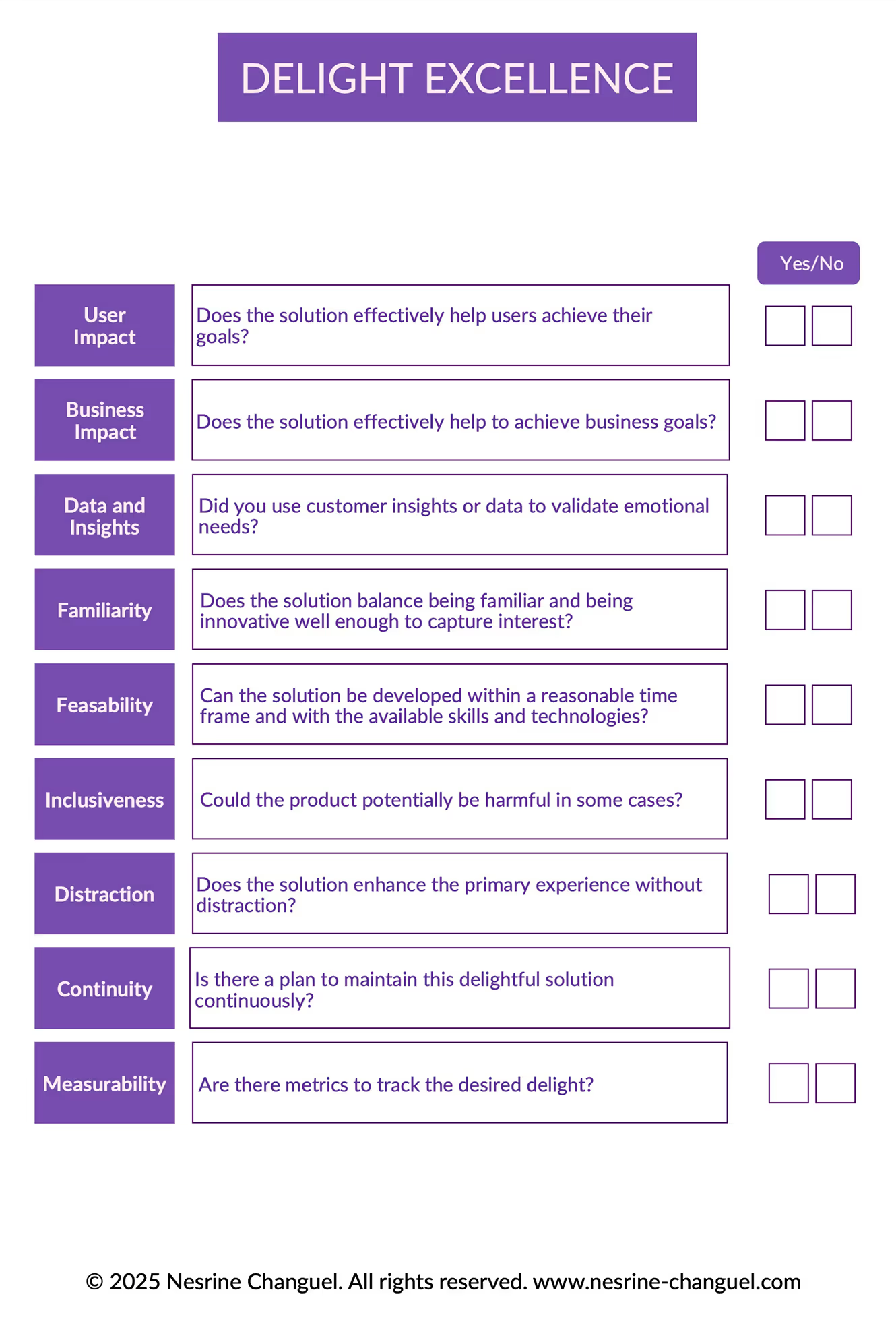
This article is written by Dr. Nesrine Changuel, former product leader at Google, Spotify, and Microsoft, and creator of the Delight Model. From video at Skype to emotionally engaging features at Google Meet and Chrome, Nesrine has made it her mission to help teams create products users truly love. Through her framework, she offers a new way to approach experimentation. In this piece, we explore the Delight Excellence Checklist, a tool to validate, in a measurable and repeatable way, the emotional and business impact of a solution.
What is delight?
A product that works flawlessly but lacks emotional pull is forgettable. Conversely, a product that dazzles but fails to meet real needs is frustrating. True product success lies at the intersection of utility and emotion, where function meets joy.
Delight is that emotional connection, a spark that transforms users into loyal advocates. It’s not just about solving a problem, but doing so in a way that feels effortless, human, and joyful. In today’s landscape of data-driven decision-making and relentless speed, emotional connection is often dismissed as a “nice-to-have.” But it’s not. It’s a strategic lever for long-term product success.
Through her framework, Nesrine introduces a new lens on experimentation. In this article, we’ll explore one of her core contributions: The Delight Excellence Checklist, a tool to validate whether solutions deliver emotional and business impact in a repeatable, measurable way.
Why do we need to experiment with delight?
Innovative features are only valuable if they genuinely connect. So how can we know if our ‘delightful’ ideas truly resonate? How do we ensure they don’t just surprise, but stick, spread, and sustain impact?
When building for delight, you’re tapping into the user’s emotions. This makes experimentation both vital and delicate. Delight can be powerful, but also risky if not applied correctly. Here are some common pitfalls to watch for:
- Disconnection from impact: Features that are charming but irrelevant may win smiles without moving the needle.
- Distraction: When delight distracts from the core experience.
- Habituation: What once felt exciting becomes expected and fades.
- Exclusion: Emotional design that unintentionally alienates or overlooks certain user groups.
How to measure delight
To validate delight, rely on metrics that reflect both behavioral engagement and emotional resonance:
- Engagement: Percentage of users interacting with the feature, drop-off rates.
- Retention: Frequency of use over time.
- Satisfaction: CSAT, NPS, in-app survey scores.
- Emotional Impact: Sentiment analysis from user feedback or post-use reflections.
- Business impact: Revenue increase, conversion rate, or retention uplift.
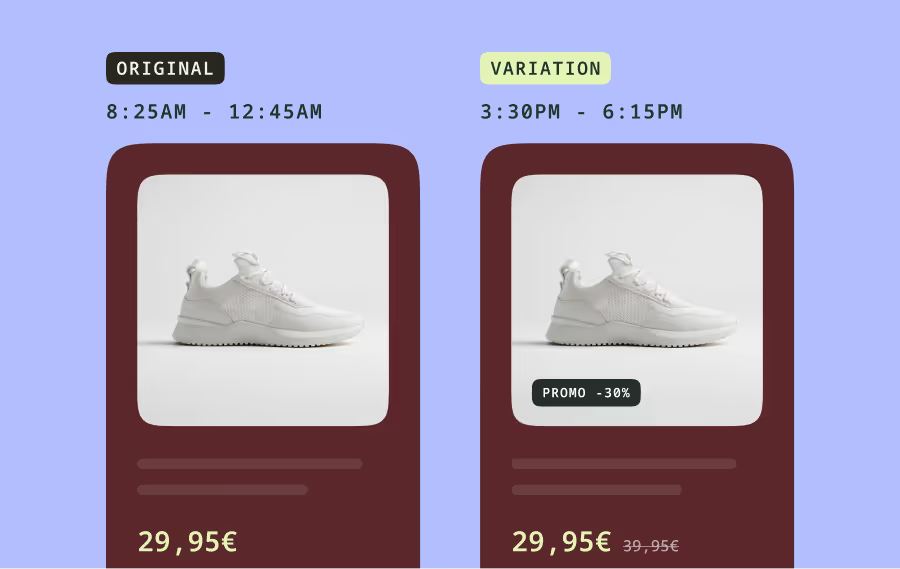
Tip: Combine qualitative insights with behavioral data. That’s where the full picture comes into focus. Run A/B tests to measure both emotional impact (such as sentiment or CSAT) and behavioral performance (like engagement or retention).
Delight Excellence: 3 sample questions
Here are three important questions from the checklist, illustrated with real-world examples:
1. Does the Solution Drive Business Impact?
Delightful features should not only charm users, they should advance product and business goals.
Example: Amazon’s hassle-free returns
Amazon’s return system allows users to get refunds without always returning the item, a surprising and trust-building policy.
- User Delight: Eliminates friction and makes customers feel trusted.
- Business impact: Reduces return processing costs and increases repeat purchases.

Tip: Look for delight opportunities that reduce friction or improve efficiency for both the user and the business.
2. Does it enhance the core experience without causing distraction?
Delight should elevate the experience, not interrupt it.
Example: Clippy, Microsoft Office’s paperclip assistant
Clippy was created to assist, but often interrupted, annoying users and derailing focus.
Lesson: Delight must be context-aware. It should support user goals, not compete with them.
Tip: Test whether your feature integrates smoothly into the user journey. Can it delight without disrupting? Before launching, use A/B testing to compare a version with the delightful feature and one without it. This helps you understand whether the feature enhances or distracts from the core experience.

3. Is there a plan to maintain this delight over time?
Delight shouldn’t be a one-time moment. Sustained connection requires continuous evolution.
Example: Google Meet’s virtual backgrounds
From static images to dynamic effects and AI-enhanced lighting, Google Meet has evolved its background feature over time based on feedback and tech advancements.
- User Delight: Users feel supported and surprised by regular improvements.
- Product Impact: Demonstrates commitment to ongoing value.

Tip: Plan for iteration. Connection that isn’t maintained will decay. Track usage, collect feedback, and keep enhancing.
How to use the delight excellence checklist
Make it part of your development cycle:
- Integrate early in ideation and prototyping.
- Evaluate consistently from build to post-launch.
- Iterate intentionally using data and feedback.
By using the Delight Excellence Checklist, you move from guesswork to intentional design. You ensure your delightful features don’t just feel good, but work brilliantly too.
Tip: Combine qualitative insight with behavioral data. That’s where the full picture of customer connection emerges. Run A/B tests to evaluate how different variants of a feature affect emotional metrics (like user sentiment, CSAT) and behavioral ones (like engagement or retention).
Go further: discover Product Delight
The book Product Delight, written by Nesrine Changuel, dives even deeper into the mechanics that transform a functional product into an emotionally memorable experience. Inside, you’ll find:
- The Delight Grid, to map your features based on their emotional and functional impact.
- The Delight Enhancers, to elevate your product experiences through surprise, personalization, celebration, and more.
- Inspiring case studies from Google, Spotify, Atlassian, Dyson, and others
- A practical method for turning delight into a strategic and measurable advantage.

Available September 23, 2025.