Sequential testing: your shortcut to smart decision-making

We are excited to announce a powerful addition to Kameleoon’s statistical toolkit: sequential testing.
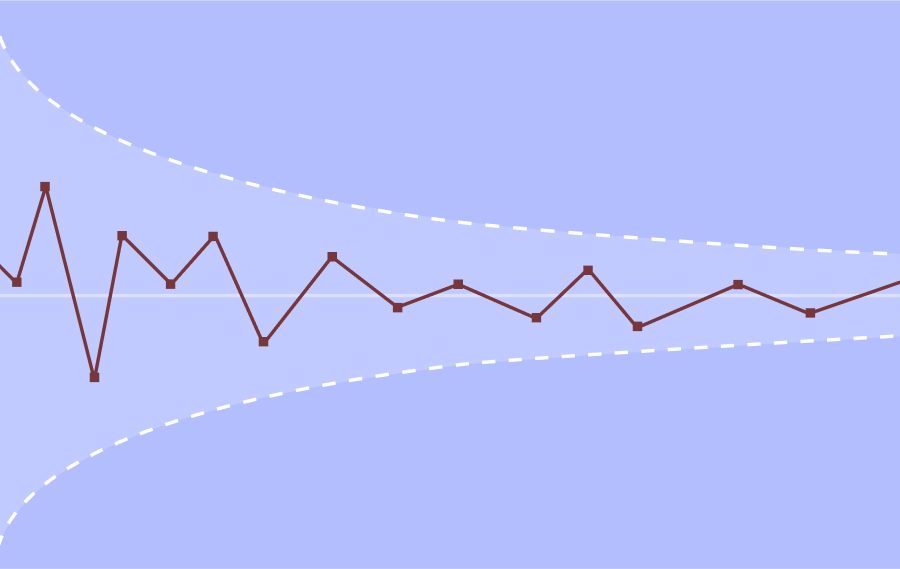
Sequential testing allows you to monitor your experiments as often as you like without undermining statistical rigor. You can act on reliable signals earlier, stop underperforming variants quickly, and make confident decisions without guessing the right sample size in advance.
The problem with peeking
In traditional A/B testing, peeking at results before an experiment ends inflates your risk of false positives. Teams often fall into this trap without realizing it. Someone refreshes the dashboard. A stakeholder asks for an update. The temptation is natural, but the cost is real: acting on noise instead of truth.
For example: A product team once tested a new onboarding flow. After a few days, they saw what looked like an 8% lift and stopped the test early. When they later re-ran it using sequential testing, the result turned out flat. The original “win” turned out to just be noise. Without sequential testing, they would have shipped a feature that added no value.
How sequential testing fixes it
Sequential testing mathematically adjusts the boundaries for significance as you look at your results. This keeps your confidence intervals valid, even if you check progress every day.

What you can do with sequential testing
- Monitor results at any time and keep them reliable
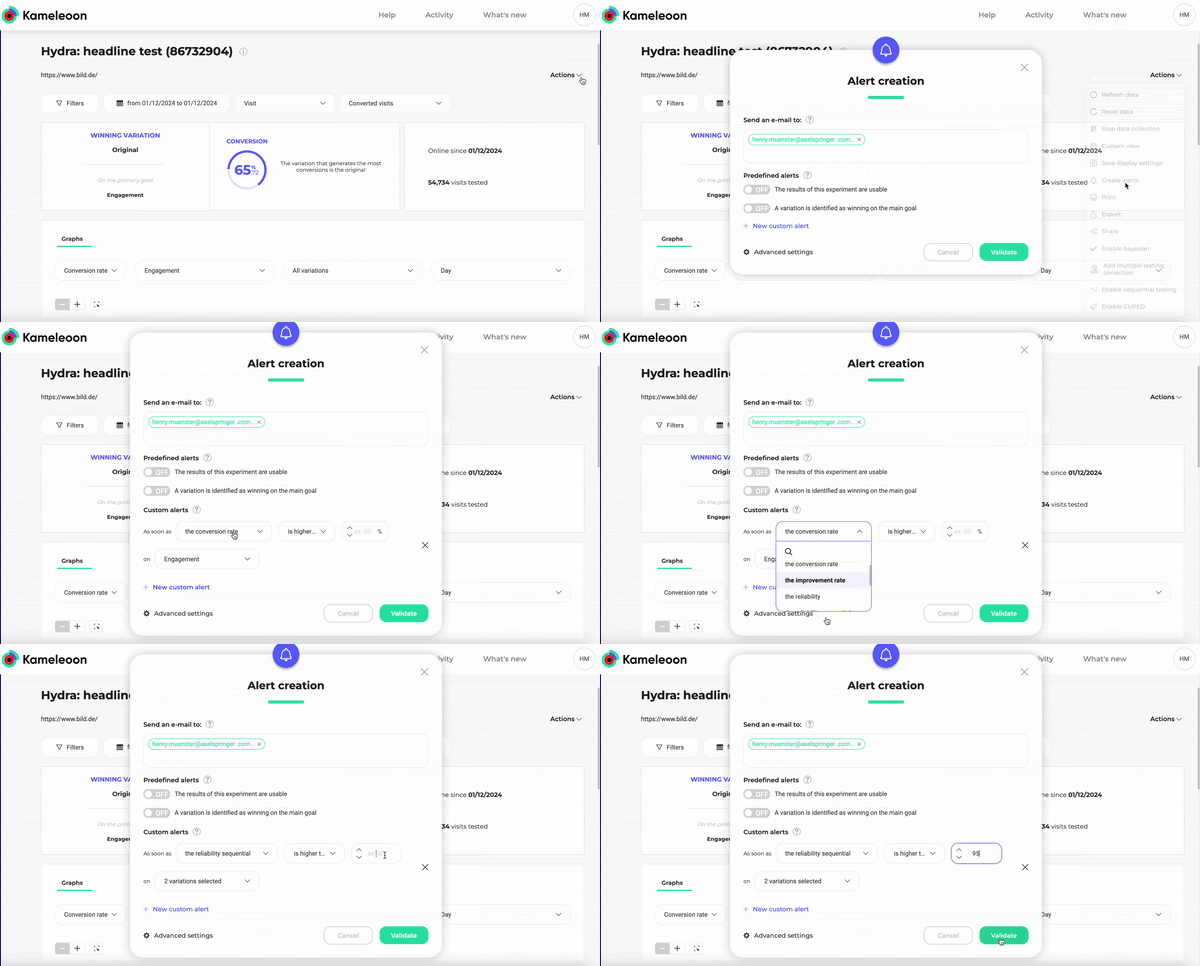
- Receive early alerts if a variation is clearly underperforming
- Eliminate the guesswork of predefining sample sizes
When sequential testing is most useful
Sequential testing is especially helpful when you want flexibility to check results frequently, when the cost of delay is high, or when stopping a bad idea early saves resources.
For other scenarios, you might choose a different method like CUPED for variance reduction or Bayesian for probability-based decision making. Kameleoon gives you all of these options in one place, so your team can pick the right approach for each experiment.
Want to go deeper? Learn three advantages of sequential testing, according to experts.