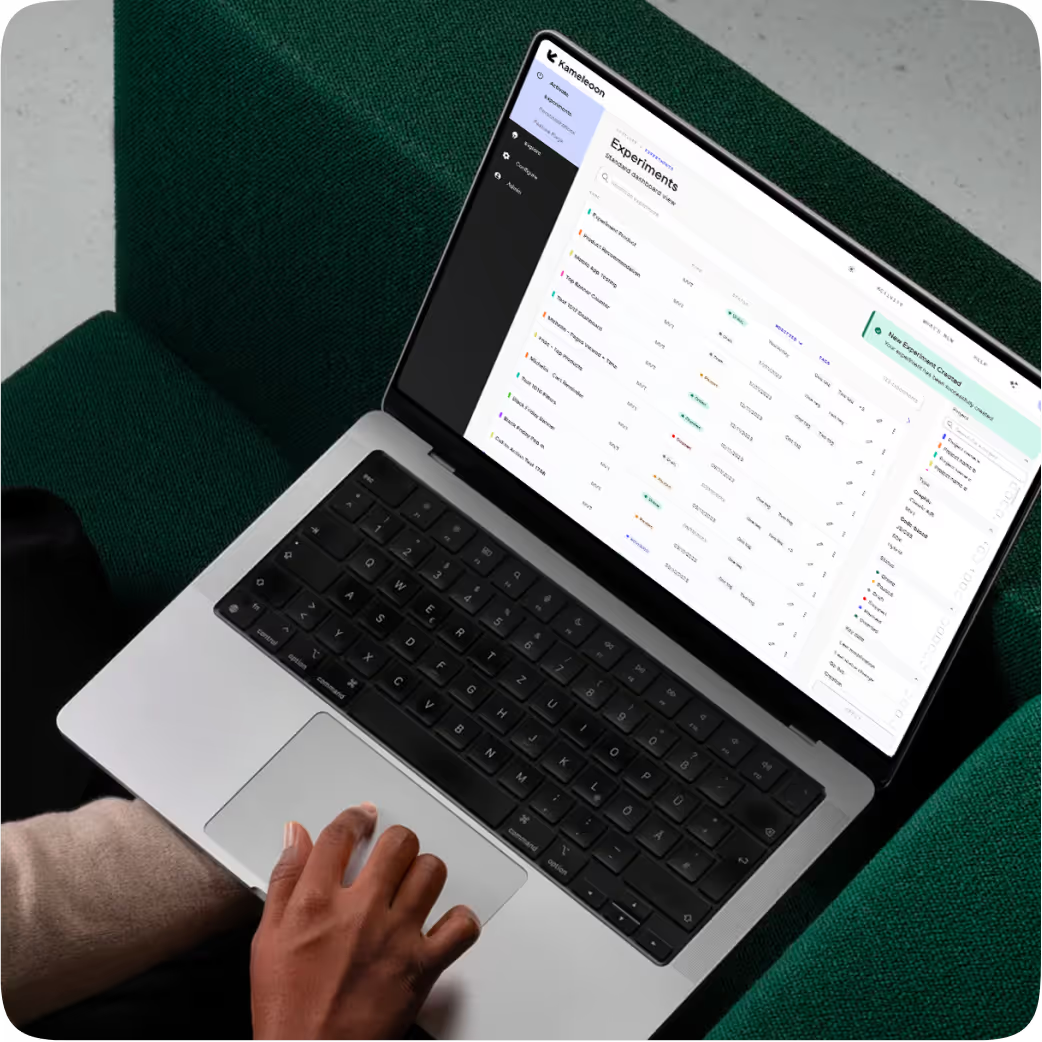
Modern product managers are building instead of just writing


The standard path of the product manager was, for a long time, predictable. You started with a user story, identified a problem, and collected intel. You designed a product requirement document (PRD), worked with developers, and deployed a solution that hopefully worked.
But a PRD cannot prove impact and a mockup can’t say how real users will respond.
As AI advances, modern product managers are increasingly able to do more: build instead of just writing, and prototype the proof of their proposals themselves.
Product managers need documentation and evidence
As artificial intelligence changes the way teams of all sizes are expected to work, product managers have greater ability to prove their concepts, and more are heading in this direction.
Traditionally, iteration stalls at the mock-up stage. Visual editors can only do so much, so teams have to wait for a new developer sprint to test an idea, no matter how simple it may be.
And without customer validation, many of these ideas end up unused, if they’re released at all.
Detached prototypes vs. live-site testing
“With AI, a PM is not only expected to be writing a PRD; a PM is also expected to do customer interviews … to rapidly prototype a solution, validate it with a handful of customers … they need to be rapidly launching this [prototype] and getting customer validation.”
Head of Marketplace, ID.me
LLMs help shift this dynamic by making it possible for the PMs themselves to prototype their ideas for validation before they get sent to developers.
To bring their ideas to life quickly, PMs have two options: vibe coding detached prototypes or prompt-based experiments built into their live websites.
- Vibe coding allows product managers to build detached prototypes that exist independently of their existing software and collect customer feedback based on their designs.
- Prompt-based experimentation builds changes directly on the live site, making them testable on real traffic. Instead of waiting for a sprint just to learn whether an idea has merit, product managers can run experiments that validate flows, messages, and early feature concepts.
Discover what works and ship it with Kameleoon
Teams often worry that moving fast means sacrificing rigor, which is why collecting customer feedback is essential to these new processes.
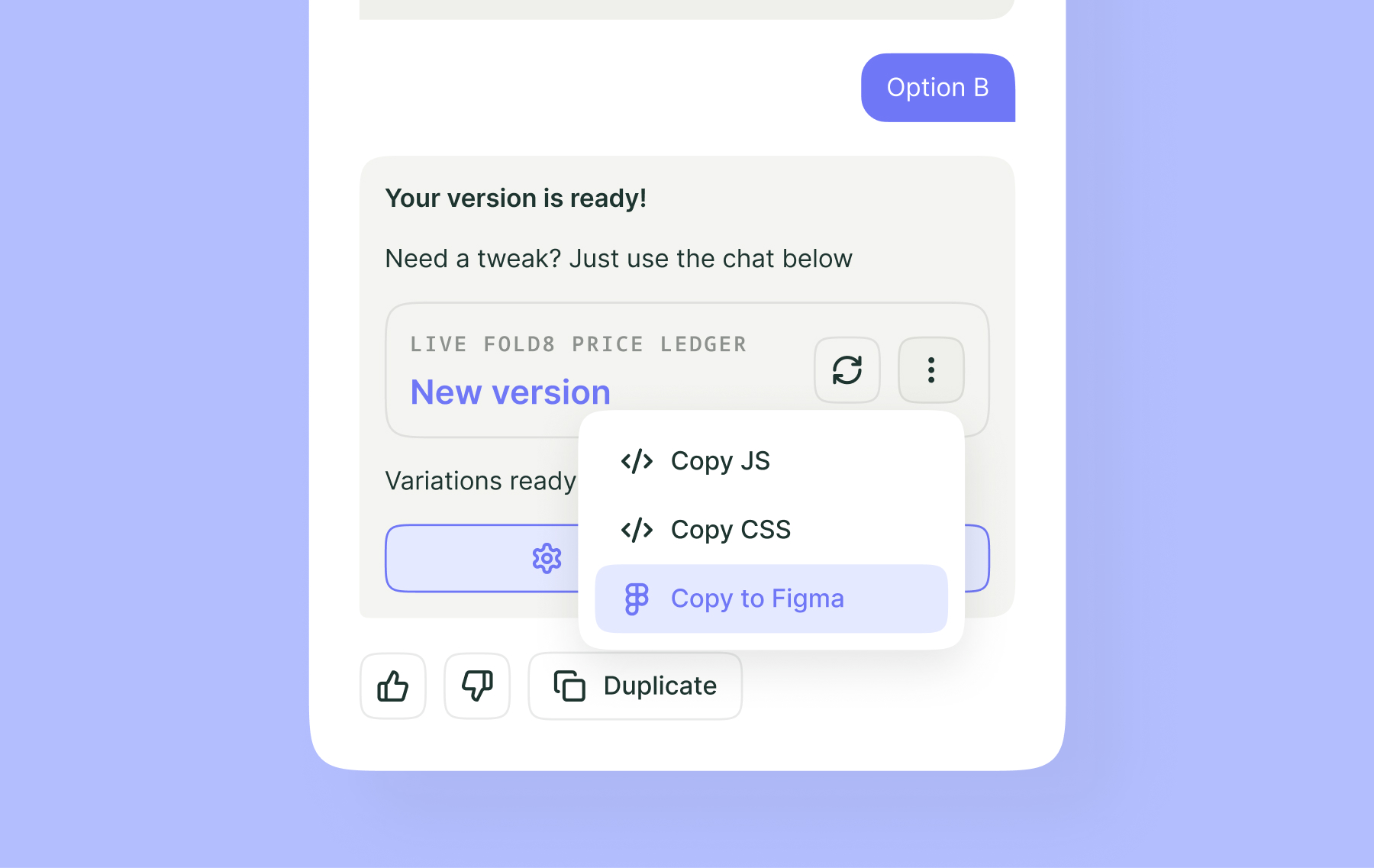
Kameleoon’s PBX is a prompt-based experimentation solution that brings together sequential testing, experimentation, and feature management so teams can test ideas without any guesswork. They can check results without undermining validity, learn what works, and use feature flags to control releases for proven changes.
“Having a tool like PBX, which is prompt-based experimentation, is awesome because now it will be part of the toolkit of the PM. They write a PRD, rapidly prototype it, launch it for a small audience segment, and get data.”
Head of Marketplace, ID.me
{{blue-block-1}}
Modern product managers are still writing. But more and more of them are building, validating, and learning earlier, faster, and more effectively than they ever have.
This means they are making faster product decisions; PBX has been shown to cut test development time by as much as 83%. But it also means they’re making better product decisions. In crowded markets and against fierce competition, that makes all the difference.
{{cta-block}}
.jpg)

Use Case: Adjusting platform load to improve engagement
Product teams using Kameleoon’s platform hypothesized that faster perceived loading would improve engagement, especially for first-time visitors arriving from paid traffic.
In order to validate the hypothesis, they sent PBX the following prompt:
Task: Reduce bounce by improving perceived performance.
Target: [Landing hero + above-the-fold elements].
Change: Prioritize rendering of hero content and CTA first; defer non-critical components (heavy media, carousels, third-party widgets) until after initial interaction. Use placeholders to avoid layout shift.
Constraints: Preserve content; only change load order and presentation. Ensure CTA remains interactive quickly. Avoid CLS impacting the hero CTA.
The tests involving this prompt were shown to improve bounce rate, CTA clicks, time-to-interactive, and conversion rate for mobile and paid traffic. These statistically-significant results meant the change made sense to prioritize, and could be implemented to improve user experiences.
Learn more about how Kameleoon’s Prompt-based Experimentation helps product teams test ideas on live traffic.
Learn more about how Kameleoon’s Prompt-based Experimentation helps product teams test ideas on live traffic.