Prompt-based experimentation vs. agentic AI: who’s really in control of your experiments?


AI is changing the way we experiment. All teams are moving faster, scaling tests, and analyzing results with less and less friction.
But behind the speed and scale, there’s a deeper question: are you driving your experimentation strategy, or has the AI taken charge?
At the heart of this question are two fast-emerging approaches to vibe experimentation: agentic AI and prompt-based experimentation (PBX).
According to the Experimentation-led Growth Report, companies expecting significant growth in 2025 are 2.2x more likely to empower teams across development, product, and marketing by enabling them to run experiments across all environments.
Vibe experimentation, whether through agentic AI or prompt-based experiments, can further empower these teams, but their roles are fundamentally different. Understanding those differences matters for teams that are serious about aligning experimentation with broader growth goals.
What is agentic AI experimentation?
Agentic AI is reactive. It monitors, listens, and searches for opportunities. AI agents are designed to analyze user behavior, funnel performance, or experiment results and recommend tests or optimizations.
For example, an AI agent might alert you that a certain segment is underperforming, or highlight early successes. This is an example of a single-purpose AI agent, one with a specific purpose to focus on by taking existing inputs and reacting to what it sees, directing teams to successes and opportunities for improvement.
What is prompt-based experimentation?
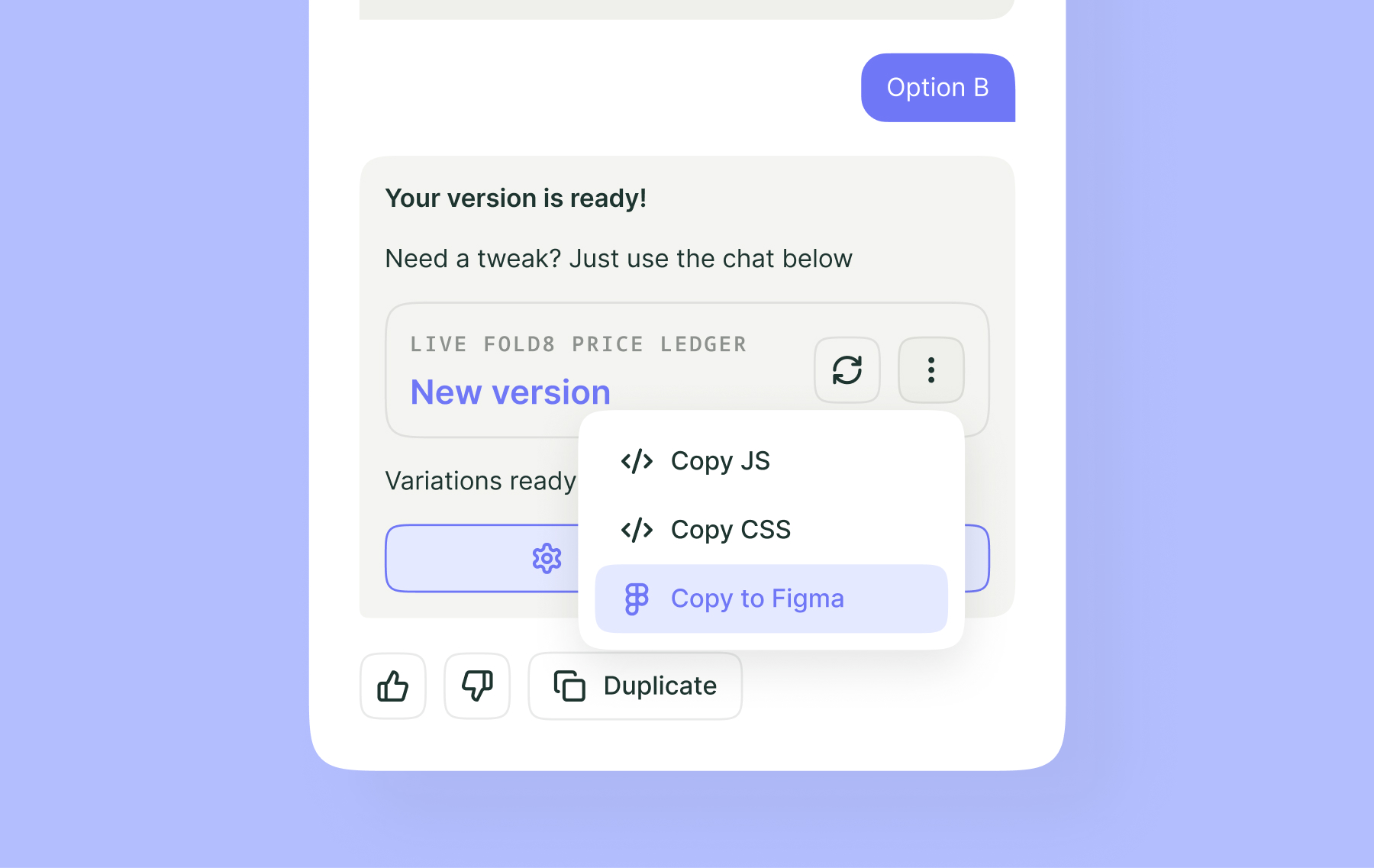
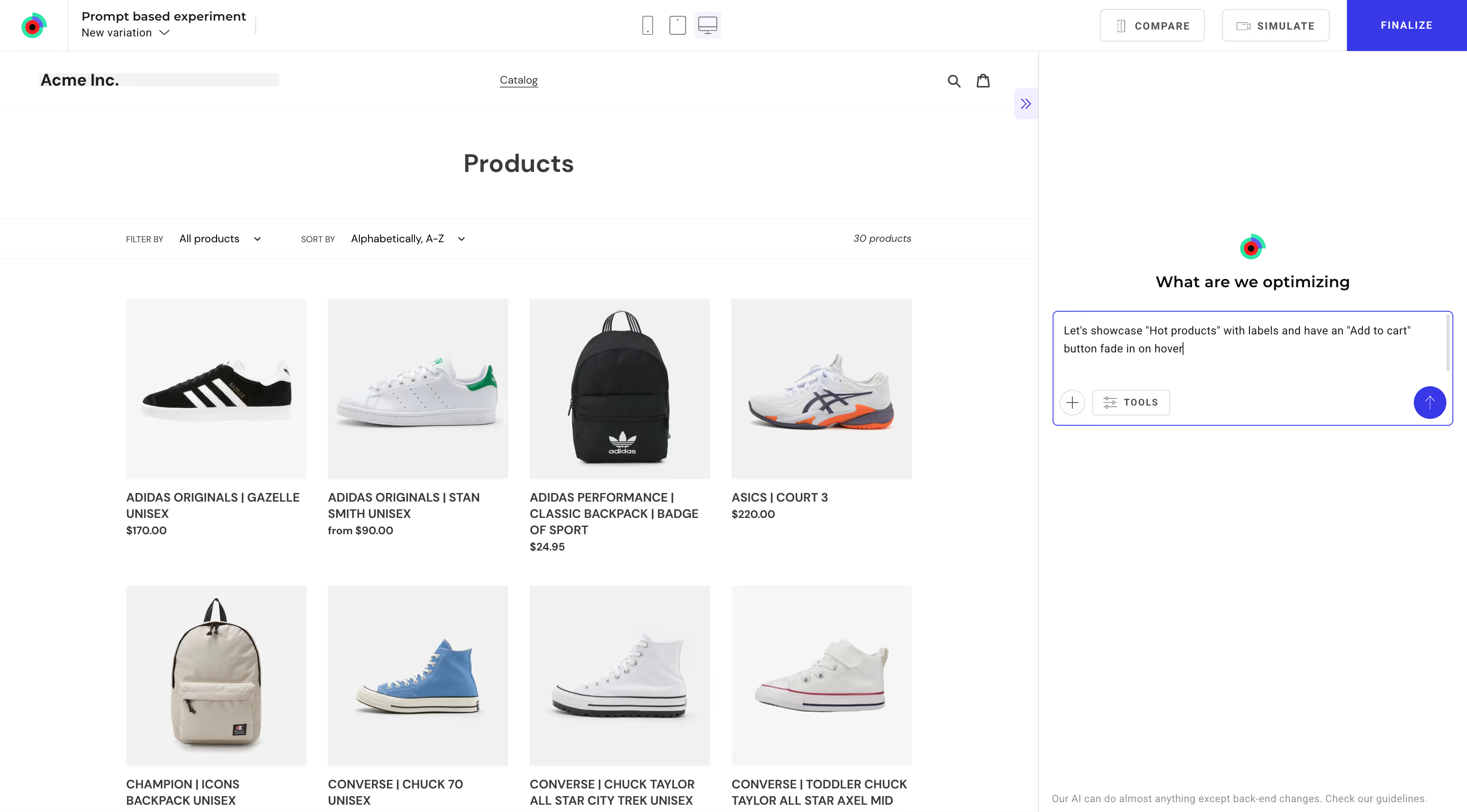
Prompt-based experimentation, on the other hand, is proactive. Rather than waiting for AI to suggest a test, a prompt-based experiment is initiated when the users themselves describe what they want to do in natural language.
For example, a prompt-based experiment might begin with the tester saying “Reduce copy on this page by 50% and see which version drives more activation.”
Here, the AI doesn’t decide what to test. Instead, it helps execute the test the team already wants to run.
The difference between agentic AI and prompt-based experiments
The obvious difference between agentic AI and prompt-based experiments is how the two operate. But the most important distinction lies in how they are used.
With prompt-based experimentation, the team takes control. Humans bring in the hypotheses, context, and strategies, and the AI accelerates setup, analysis, and iteration.
With agentic AI, the AI makes more decisions. It decides when and where to act. This is powerful in specific contexts, but does come with two primary tradeoffs:
AI agents are only as strong as the tools they run on. An AI agent running on a web experimentation platform can create closed loop processes that run through insights, hypotheses, testing, and measurement on things like copy, banners, and colors.
While it's helpful to have variations suggested by AI, blindly acting on AI suggestions is rarely a good idea. It is still important to investigate the data that led to the prompt before you can act on its suggestions.
When to use each approach
Agentic AI allows you to:
- Proactively analyze conversion paths while you work on other tasks
- Monitor live experiments or segments
- Surface issues when teams are managing too many touchpoints to easily monitor
Prompt-based experimentation works best when:
- Your team has existing hypotheses to test
- You need to move quickly without having to rely on developers
- You value transparency, auditability, and human-centered strategy
Agentic AI or prompt-based experimentation: which is right for your team?
High-performing companies make sure all of their teams can create optimized experiences, rather than just those with developer resources.
Both approaches to vibe experimentation will help your teams to get there, but the one that works best for your teams will depend on your perspective and need: prompt-based experiments keep the tester in the driver’s seat, while agents let them sit in the back.
In order to grow, learn, and align on outcomes, teams need to stay in control. Prompt-based experimentation ensures that humans, not algorithms, guide your testing roadmap.
Whether you adopt one approach, the other, or both, it is crucial to ensure that you keep that control with the teams who know your product best.
Want to try being in the driver’s seat? Start your free trial for Kameleoon’s vibe experimentation tools today!
.jpg)