What are guardrail metrics and why are they important?


Guardrail metrics form the governance layer of modern experimentation. They define the boundaries within which teams can test, learn, and grow safely. By tracking the impact of experiments on trust, performance, and user experience, guardrails ensure that progress in one area doesn’t quietly erode another.
In mature experimentation programs, guardrail metrics are defined at the hypothesis stage from the start, where business intent meets experiment design.
This practice turns experimentation into a governed process, one where growth is measured not just by uplift, but by its stability, safety, and alignment with organizational values.
What is a guardrail metric?
Guardrail metrics are KPIs that act as safeguards in experimentation. They ensure that improvements (or any changes) in one area (such as conversion, engagement, or performance) don’t unintentionally harm others, like retention, reliability, or trust.
For example, a commerce team tests a new checkout flow. The primary metric is checkout completion rate (the percentage of users who start checkout and finish the transaction).
Midway through the experiment, however, guardrail metrics begin to flag issues. Payment error rate increases, page load time on the payment step slows down, and abandoned checkouts after payment entry rise sharply.
Based on these signals, the team pauses the experiment.
In short, guardrail metrics allow experimentation to move fast without letting that speed drift into risk.
How to choose and apply your guardrail metrics
Choosing guardrails means mapping each optimization area to the metrics that protect its integrity, spanning user experience, performance, and business outcomes.
Across domains, every experiment involves both opportunity and risk. This framework shows how guardrails set the limits for safe experimentation, helping teams achieve impact without unintended side effects.
Governance considerations for applying guardrails
Guardrails aren’t static metrics; they’re governance calibrations that must adapt to experiment type, time horizon, and business maturity. When applied well, they balance speed with accountability and turn experimentation into a sustainable learning system. Here are a few key considerations for designing and maintaining effective guardrails.
Design for immediacy and continuity. Depending on your experiment, guardrails could operate across time horizons. Consider both:
How Kameleoon works with guardrail metrics
Kameleoon helps you operationalize guardrail metrics by integrating seamlessly with your analytics and data stack. By connecting to your broader experience ecosystem, Kameleoon coordinates experimentation insights across tools, allowing you to monitor both primary and guardrail metrics.
Kameleoon + your analytics tool:
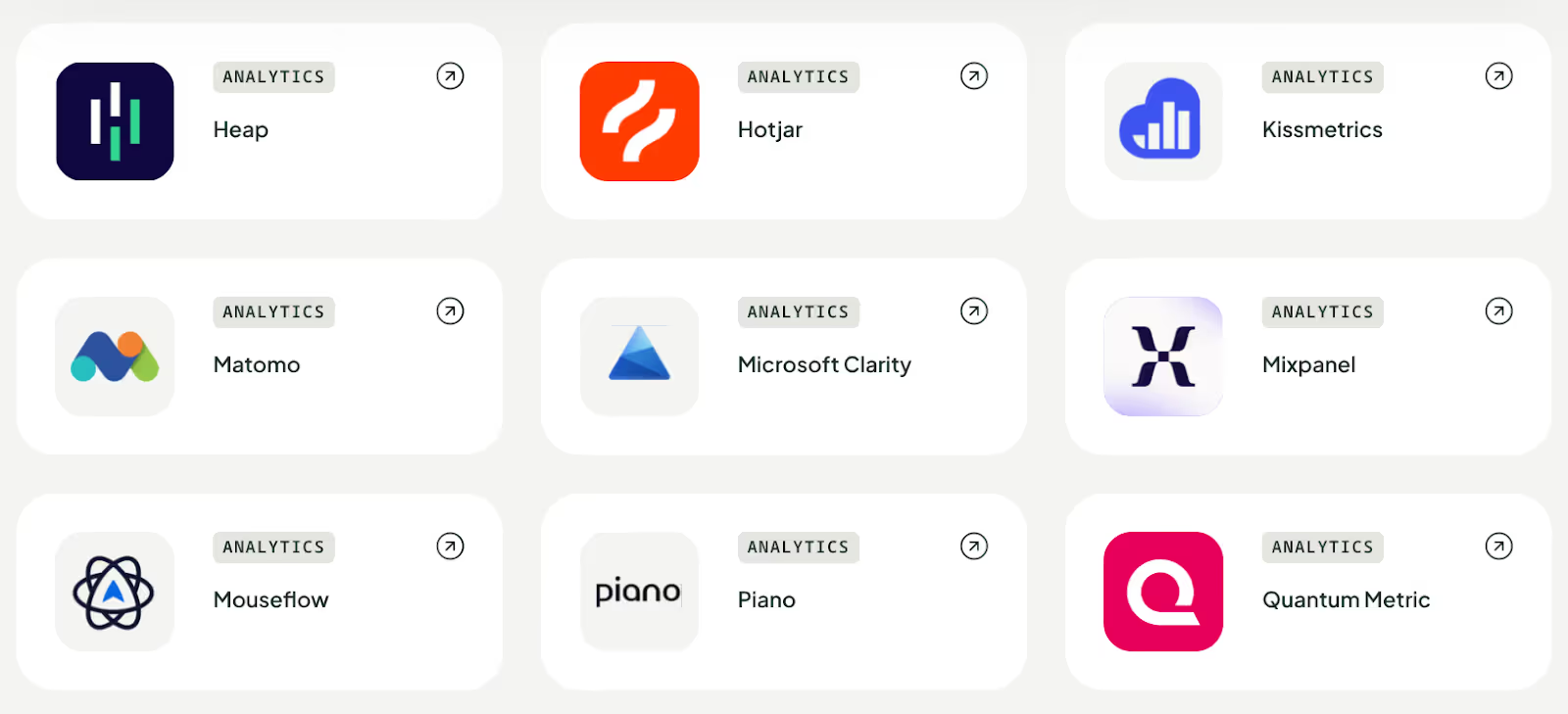
Through integration with platforms like Mixpanel, Amplitude, or Google Analytics, Kameleoon passes experiment exposure data into your dashboards, enabling you to correlate experimental variants with behavioral metrics such as conversion efficiency, performance trends, and engagement or satisfaction indicators.
This visibility helps you identify whether growth in one area comes with trade-offs in another. The result: faster, data-driven decisions and experimentation governance that scales responsibly.
Bringing it all together
Guardrail metrics form the foundation of experimentation governance, bringing accountability into the core of testing. They ensure that every optimization respects the organization’s broader principles: performance, trust, and long-term value.
When guardrails are defined at the hypothesis stage and enforced throughout the experiment lifecycle, they create a system where speed and safety coexist. Experimentation becomes not just a growth engine, but a governance framework, one where risk is measurable, reversible, and managed by design.
Discover how Kameleoon helps enterprises put all this into practice. Book a personalized demo to see how guardrail tracking and governance can integrate seamlessly into your experimentation workflow.
.jpg)